How to Start an Online Business From Home: A Complete Step-by-Step Guide
⭐ Estimated Reading Time: 20-29 minutes
Starting an online business doesn’t require a fancy office, a huge budget, or years of experience. What it does require is a clear plan, consistent action, and the willingness to keep learning as your grow.
Whether you’ve been dreaming about selling digital products, becoming a virtual assistant, starting a blog, launching an online store, or turning your skills into a full-time business, there’s never been a better time to get started.
The online business world continues to evolve, but one thing hasn’t changed: people are looking for solutions. If you can solve a problem, make someone’s life easier, save them time, or help them reach a goal, you have the foundation of a business.
The challenge isn’t usually finding an idea. It’s knowing what to do next.
Many aspiring entrepreneurs spend weeks — or even months — jumping between Youtube videos, blog posts, podcasts, and social media advice. One expert tells you to start an email list first. Another says you need a website before anything else. Then someone else insist you should be posting on every social media platform.
I used to be that person and it’s no wonder so many people feel overwhelmed before they’ve even begun.
Here’s the good news.
Building an online business doesn’t have to fell confusing or chaotic. When you break the process into manageable steps and focus on one milestone at a time, starting your business becomes much more achievable.
In this guide, we’ll walk through the exact steps to start an online business from home — from choosing the right business idea to building your brand, creating your first offer, attracting customers, and setting yourself up for long-term growth.
Along the way, you’ll learn common mistakes to avoid, practical strategies that actually work, and simple action steps you can take today. My goal isn’t just to help you launch a business — it’s to help you build one with a strong foundation that can continue growing for years to come.
So grab your favorite coffee or tea, open a notebook, and let’s build your future business together.
Feeling overwhelmed by all the steps?
This complete business-building system walks you through the complete process of starting an online business. If you’d like a guided roadmap with workbooks, templates, checklists, and step-by-step lessons, join the Business GPS Waitlist to be the first to know when it launches. This blog post gives you the map. Business GPS gives you the guided journey.
your business roadmap is coming
Be the First to Experience Business GPS
Join the waitlist for early access, exclusive founder pricing, behind-the-scenes course previews, and important launch updates. You’ll be the first to know when Business GPS™ is ready to help you turn your business idea into a clear plan for launching and growing online.
Why starting an online business is one of the best decisions you can make
An online business is a business that operates primarily through the internet. Instead of relying on a physical storefront, you connect with customers through your website, email marketing, social media, search engines, online marketplaces, or digital platforms.
Depending on your goals, your online business might involve:
- Selling digital products like templates, planners, or online courses
- Offering freelance or virtual assistant services
- Coaching or consulting
- Running a membership community
- Blogging and earning through affiliate marketing
- Selling physical products through an online store
- Creating printable products
- Teaching through workshops or digital programs
One of the biggest advantages of an online business is flexibility. Many entrepreneurs begin while working a full-time job, raising children, attending school, or managing other responsibilities. I’m a prime example, as I work full-time and I am raising a two and eight year old.
You don’t need everything to be perfect before you begin. In fact, many successful businesses started with a simple website, one product, and a willingness to learn along the way.
Key Takeway
You don’t need to have everything figured out before your start. You simply need a clear direction and a commitment to taking consistent action.
Why 2026 is a great time to start an online business
If you’ve been wondering whether you’ve “missed your chance,” let’s put that fear to rest.
Every year, millions of people search for ways to earn additional income, build flexible careers, and create businesses that fit around their lives. At the same time, consumers are more comfortable than ever buying digital products, booking online services, joining memberships, and learning through online courses.
Technology has also lowered the barrier to entry. Today, you can build a professional website, design products, automate emails, and market your business using affordable—and often free—tools.
Artificial intelligence has made certain tasks faster, but it hasn’t replaced the need for creativity, strategy, or genuine expertise. People still buy from businesses they trust. They value clear communication, helpful resources, and brands that understand their needs.
That means there’s still plenty of opportunity for new entrepreneurs who are willing to solve real problems and show up consistently.
The businesses that thrive aren’t necessarily the ones with the biggest budgets. They’re the ones that focus on providing value, building relationships, and improving over time.
What This Means for You
Instead of asking, “Is it too late to start?” ask yourself:
“What problem can I help someone solve?”
That question is often the beginning of a successful online business.
Key Takeaway
Success in business rarely comes from chasing every trend. It comes from choosing a direction, serving your audience well, and staying consistent.
Step 1: Choose the Right Online Business Idea
One of the biggest myths about entrepreneurship is that you need a completely original idea to succeed.
You don’t.
Most successful businesses aren’t built around brand-new ideas—they’re built around solving familiar problems in a better, simpler, or more accessible way.
Instead of asking, “What’s the perfect business idea?” ask yourself:
- What skills do I already have?
- What problems do people ask me to help solve?
- What topics could I happily talk about for years?
- What type of lifestyle do I want my business to support?
- Do I want to sell products, services, or both?
These questions will help you choose a business model that fits both your strengths and your long-term goals.
For many beginners, some of the most approachable online business ideas include:
- Selling digital products
- Becoming a virtual assistant
- Starting a blog
- Offering freelance services
- Coaching or consulting
- Creating online courses
- Selling printables or templates
- Affiliate marketing
- Content creation
The goal isn’t to choose the “perfect” idea. The goal is to choose a direction you can begin testing and improving.
Common Mistake
Trying to pursue five different business ideas at once.
When your attention is scattered, your progress often is too.
Focus on building one business well before expanding into additional income streams.
Your Next Step
Write down three online business ideas that genuinely interest you. Then narrow your list to the one that best aligns with your skills, interests, and the audience you want to serve.
Step 2: Validate Your Business Idea Before You Spend Time or Money
You’ve picked a business idea that excites you. That’s a huge first step.
Now it’s time to answer one of the most important questions every entrepreneur should ask:
Will someone actually pay for this?
It might not be the most exciting part of starting an online business, but validating your idea can save you months of frustration later.
One of the biggest mistakes new entrepreneurs make is spending weeks designing a logo, building a website, or creating products before they’ve confirmed that people actually want what they’re selling.
Here’s the good news.
You don’t need hundreds of customers or expensive market research to validate your idea. You simply need evidence that your solution solves a real problem for a real audience.
Think of validation as gathering clues rather than looking for perfection.
What Does It Mean to Validate a Business Idea?
Business validation is the process of confirming that there’s genuine demand for your product or service before investing significant time or money into it.
In other words, you’re answering three important questions:
- Is this a real problem?
- Are people actively looking for a solution?
- Would someone realistically pay for it?
If the answer is yes, you’re building on a much stronger foundation.
Five Simple Ways To Validate Your Idea
1. Search What People Are Already Looking For
One of the easiest places to begin is by seeing what people are already searching online.
Look for questions like:
- How do I…
- Best way to…
- Tips for…
- Templates for…
- Checklist for…
If people are searching for these topics consistently, they’re telling you exactly what they need help with.
Google autocomplete, Pinterest search suggestions, Reddit discussions, Facebook groups, and online communities are all excellent places to discover common questions.
Pro Tip: Don’t just look at search volume. Pay attention to the language people use. Those exact words can become future blog posts, product names, and marketing copy.
2. Study Businesses Already Serving Your Audience
Some entrepreneurs worry that competition means they’ve missed their opportunity.
In reality, competition is often a positive sign.
If businesses are successfully selling products similar to yours, it usually means there’s an established market.
Instead of asking,
“Has someone already done this?”
Ask,
“How can I make this easier, clearer, more beginner-friendly, or more complete?”
Sometimes your competitive advantage isn’t creating something completely new—it’s presenting it in a way that’s easier for your ideal customer to understand and use.
3. Ask Your Target Audience
You don’t need a huge following to collect valuable feedback.
Reach out to:
- Friends in your niche
- Facebook communities
- Existing email subscribers
- Instagram followers
- Pinterest audiences
- Networking groups
Ask simple questions like:
- What’s your biggest struggle with…?
- What’s taking you the longest?
- What do you wish someone would create?
- If you could wave a magic wand and solve one problem, what would it be?
You’ll often uncover opportunities you hadn’t considered before.
4. Create a Small Version First
Here’s something most people don’t realize…
Your first product doesn’t need to be your biggest product.
Instead of creating a 300-page course or a massive membership, consider launching:
- A simple template
- A workbook
- A checklist
- A mini-guide
- A swipe file
- A planner
Small products help you learn what your audience values before investing months into something larger.
Many successful businesses start with one simple digital product that eventually grows into an entire product ecosystem.
5. Listen More Than You Sell
The best entrepreneurs spend far more time listening than talking.
Pay attention to:
- Frequently asked questions
- Customer emails
- Blog comments
- Pinterest searches
- Product reviews
- Community discussions
Patterns will begin to emerge.
Those patterns become future products, blog posts, freebies, and offers.
Common Validation Mistakes
Avoid these common traps:
❌ Building before researching
❌ Assuming everyone is your customer
❌ Asking only family and friends for feedback
❌ Ignoring what people actually search for
❌ Waiting until everything feels “perfect”
Remember, your goal isn’t perfection.
It’s progress.
Your Next Step
Write down the biggest problem your business solves in one sentence.
Then ask yourself:
“How do I know people are already looking for this solution?”
If you can’t answer that question yet, spend another hour researching before moving forward.
Step 3: Create a Simple Business Plan (Without Writing a 50-Page Document)
The phrase business plan can sound intimidating.
If you’ve ever pictured a massive document filled with financial projections, investor presentations, and complicated charts, you’re not alone.
But here’s the truth.
Most online businesses don’t need a lengthy business plan to get started.
What they do need is clarity.
A simple business plan acts like a roadmap. It helps you make better decisions, stay focused on your goals, and avoid chasing every new idea that pops into your head.
Without one, it’s easy to spend months staying busy without making meaningful progress.
Let’s make this easier.
Instead of writing dozens of pages, focus on answering a few key questions.
What Should Be Included in a Simple Business Plan?
Your first business plan should answer these questions:
Who do you help?
Be specific.
Instead of:
“Women.”
Try:
“Female entrepreneurs who want to build profitable online businesses while working full-time.”
The clearer your audience, the easier your marketing becomes.
What problem do you solve?
People don’t buy products.
They buy solutions.
Ask yourself:
- What frustration am I helping someone overcome?
- What goal am I helping them reach?
- What transformation am I providing?
Your business should make someone’s life easier, faster, less stressful, or more successful.
What Will You Sell?
Outline your first offer.
For example:
- Digital templates
- Printable planners
- Online course
- Coaching
- Virtual assistant services
- Membership
- Freelance packages
Don’t plan twenty offers.
Plan one excellent one.
How Will People Find You?
Marketing deserves attention from day one.
Think about where your ideal customer already spends time.
Examples include:
- Google Search
- Email marketing
- YouTube
- Blogging
You don’t have to master every platform.
Choose one or two channels and become consistent before expanding.
What Are Your Goals?
Goals provide direction.
Instead of saying:
“I want a successful business.”
Create measurable goals such as:
- Publish one blog post every week.
- Grow my email list to 500 subscribers.
- Launch my first digital product within 90 days.
- Reach my first 10 sales.
- Post five Pinterest Pins each day.
Small milestones build momentum.
Your Business Plan Doesn’t Need to Be Perfect
One of the biggest misconceptions about planning is believing everything has to be figured out before you begin.
It doesn’t.
Your business plan will evolve as you gain experience, receive customer feedback, and learn more about your audience.
The important thing is having a direction.
Think of your business plan as a living document—not something you create once and never revisit.
The entrepreneurs who build lasting businesses are the ones who review, refine, and improve their plans over time.
Common Mistake
Trying to build an entire business in one weekend.
There are many moving pieces to an online business, and they don’t all need to happen at once.
Focus on completing the next right step instead of worrying about every future decision.
Progress compounds over time.
Quick Business Planning Checklist
Before moving on, make sure you can answer these questions:
- Who is my ideal customer?
- What problem do I solve?
- What is my first offer?
- How will people discover my business?
- What are my goals for the next 90 days?
- What action can I take this week to move closer to launching?
If you can answer these confidently, you’ve already created a stronger business foundation than many new entrepreneurs.
Your Next Step
Spend 30 minutes outlining your answers to each question above. Don’t aim for perfection—aim for clarity.
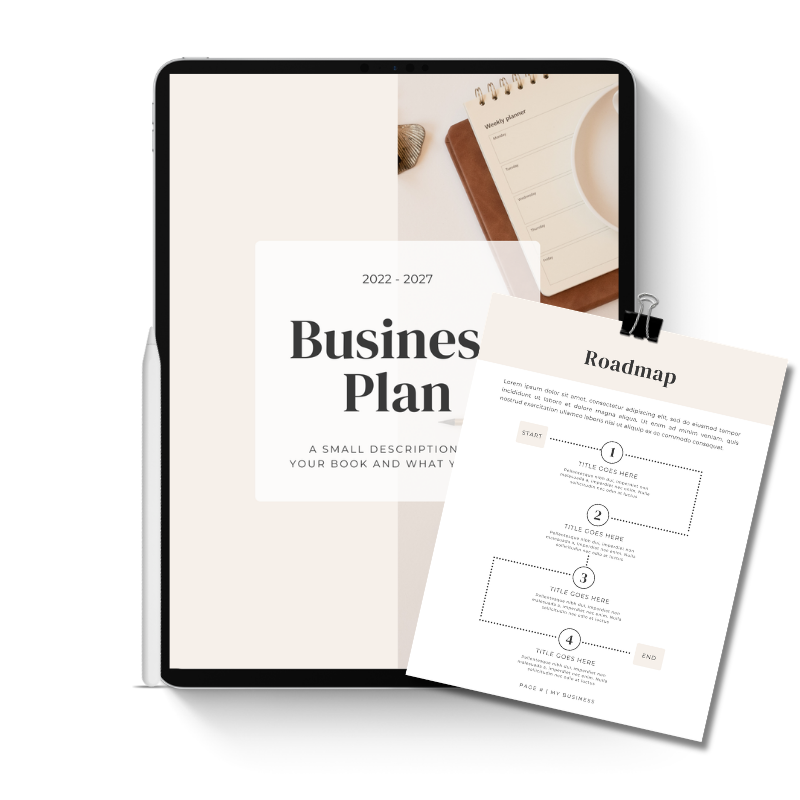
Ready to organize your ideas, define your audience, clarify your offers, and create a business roadmap?
Our Business plan workbook is a 100-page Canva editable designed all-in-one planner that gives you the structure, clarity, and organization you need to stay focused and productive.
Step 4: Build a Brand People Remember and Trust
Once you’ve validated your business idea and created a simple business plan, it’s time for one of the most exciting parts of starting an online business—building your brand.
For many entrepreneurs, branding immediately brings one thing to mind:
A beautiful logo.
While a logo is certainly part of your brand, it’s only a small piece of the puzzle.
Your brand is really the experience people have every time they interact with your business.
It’s how your website feels.
It’s the tone of your emails.
It’s the colors you consistently use.
It’s the confidence your customers feel when they purchase from you.
Most importantly, it’s the promise you’re making to your audience.
When someone visits your website for the first time, they should quickly understand:
- Who you help
- What problem you solve
- Why they should trust you
- What they should do next
If those four questions aren’t answered within a few seconds, visitors are likely to leave.
What Makes a Strong Brand?
A memorable brand doesn’t have to be flashy or complicated.
Instead, it should be:
- Clear
- Consistent
- Professional
- Recognizable
- Customer-focused
Think about some of your favorite brands.
You probably recognize them instantly—not just because of their logos, but because they have a consistent personality, visual identity, and message.
That’s exactly what you’re aiming to create.
The Five Core Elements of Your Brand
1. Your Business Name
- Easy to spell
- Easy to remember
- Relevant to your audience
- Flexible enough to grow with your business
Choose a name that’s:
Avoid choosing a name that’s so specific it limits your future growth.
For example, if you eventually want to expand beyond Pinterest marketing, naming your business “Pinterest Printables Co.” may feel restrictive later.
Think long term.
2. Your Brand Colors
Colors influence how people feel about your business.
For example:
- Soft neutrals create a welcoming, sophisticated feel.
- Blue often communicates trust and reliability.
- Green is associated with growth and balance.
- Gold suggests quality and premium value.
Choose three to five primary brand colors and use them consistently across your website, graphics, emails, and social media.
Consistency is far more important than choosing the “perfect” color palette.
3. Typography
Fonts help communicate personality.
Try limiting yourself to:
- One heading font
- One body font
- One accent font (optional)
Using too many fonts can make your brand feel cluttered and inconsistent.
4. Your Brand Voice
Your words matter just as much as your visuals.
Ask yourself:
If my business were a person, how would it speak?
Would it be:
- Friendly?
- Encouraging?
- Professional?
- Bold?
- Calm?
- Inspirational?
Once you establish your voice, use it consistently in every blog post, email, social media caption, and product description.
People begin to recognize brands they hear consistently.
5. Your Brand Promise
This might be the most important part of your brand.
Complete this sentence:
“My business helps _________ achieve __________ by providing __________.”
If you can answer that clearly, your marketing becomes dramatically easier.
Do You Need a Logo Before You Launch?
Here’s something that surprises many new business owners.
No.
You don’t need an expensive custom logo before making your first sale.
Many successful businesses launched with simple text-based logos while they focused on serving customers and improving their offers.
Your logo can evolve.
Your reputation is what truly builds your brand.
Don’t let branding perfection delay business progress.
Common Branding Mistakes
Avoid these common pitfalls:
- Changing your colors every few weeks
- Using a different voice on every platform
- Trying to appeal to everyone
- Copying another business’s style
- Spending months branding instead of launching
Remember, your audience is looking for solutions—not perfection.
Pro Tip
Aim for an 80% finished brand instead of waiting for a 100% perfect one.
As your business grows, your brand naturally grows with it.
Your Next Step
Choose your business colors, fonts, and brand voice this week. Then update your website, Pinterest graphics, and social media profiles so everything feels cohesive and professional.
Step 5: Build a Website That Turns Visitors Into Customers
One of the biggest milestones in your online business journey is launching your website.
Think of your website as your digital home.
Unlike social media platforms, where algorithms decide who sees your content, your website is something you own and control.
It’s where people learn about your business, explore your products or services, join your email list, and ultimately decide whether they trust you enough to become a customer.
The good news?
Your first website doesn’t need to be elaborate.
In fact, many successful online businesses begin with just a handful of well-designed pages.
What Pages Does a New Business Website Need?
When you’re first starting out, keep things simple.
Focus on creating these core pages:
| Page | Purpose |
|---|---|
| Home | Explain who you help, what you offer, and guide visitors to their next step. |
| About | Share your mission, values, and why your business exists. |
| Products or Services | Clearly showcase what you sell and the benefits for your audience. |
| Blog | Publish helpful, SEO-friendly content that attracts long-term traffic. |
| Contact | Give visitors an easy way to reach you. |
| Privacy Policy & Terms | Build trust and meet legal requirements. |
You can always add more pages later as your business grows.
What Makes a Great Homepage?
Your homepage should answer four questions within the first few seconds:
- Who is this for?
- What problem does it solve?
- Why should I trust you?
- What should I do next?
If visitors have to search for those answers, they’re more likely to leave.
Keep your messaging clear, welcoming, and focused on your audience’s goals—not just your business.
Should You Wait Until Your Website Is Perfect?
Absolutely not.
One of the biggest reasons new entrepreneurs delay launching is because they’re waiting for perfection.
They tweak colors.
Rewrite headlines.
Swap fonts.
Move sections around.
Then do it all over again.
Meanwhile, they’re missing opportunities to connect with real customers.
Your website should grow with your business.
Launch first.
Improve later.
Your Next Step
Create a simple website with the essential pages listed above. Focus on clarity and usability instead of perfection.
Step 6: Create an Offer People Actually Want to Buy
Now that you’ve built your foundation, it’s time to create something your audience can purchase.
This is the moment your business begins transforming from an idea into something that can generate income.
One of the biggest misconceptions new entrepreneurs have is believing they need dozens of products before they can launch.
The opposite is usually true.
Many successful online businesses begin with one well-crafted offer that solves one specific problem exceptionally well.
Instead of trying to create everything at once, focus on helping one person solve one problem.
That approach is not only simpler—it’s often much more profitable.
What Is an Offer?
An offer is the solution you provide in exchange for payment.
Depending on your business, your first offer might be:
- A digital template
- A printable planner
- A workbook
- An online course
- Coaching
- A service package
- A membership
- A swipe file
- A digital toolkit
- A consultation
Notice something?
People aren’t buying PDFs, Canva templates, or coaching sessions.
They’re buying the outcome.
For example:
❌ 50 Canva Templates
✅ Save hours creating professional social media content.
Ask Yourself These Five Questions
Before creating your first offer, ask:
What problem am I solving?
The clearer the problem, the easier the sale.
Who is this designed for?
Avoid saying:
Everyone.
Instead, picture one ideal customer.
What are they struggling with today?
What transformation will they experience?
People don’t buy information.
They buy results.
Think about how life becomes easier after using your product.
Can I explain it in one sentence?
If you can’t clearly explain your offer, your customers probably won’t understand it either.
Aim for simplicity.
Is this the next logical step?
Your offer should naturally follow the content you’re creating.
For example:
Someone reading this article might next need:
- A Business Startup Checklist
- A Business Plan Workbook
- Business GPS™
That’s exactly why educational content converts so well—it helps readers move forward.
Start Small Before You Expand
Here’s something I’ve seen over and over again.
Many entrepreneurs spend six months building twenty products before selling their first one.
Meanwhile, someone else launches one simple template, gets customer feedback, improves it, and starts making consistent sales.
Which approach teaches you more?
The second one.
Your first offer isn’t meant to be your last.
It’s meant to help you learn.
As your audience grows, your product library can grow alongside it.
Common Mistakes to Avoid
- Creating products nobody asked for
- Adding unnecessary features
- Underpricing because you’re new
- Waiting until everything feels perfect
- Launching without collecting email subscribers
Remember:
Done beats perfect.
Progress beats procrastination.
Your Next Step
Write a one-sentence description of your first offer.
If someone asked,
“What do you sell?”
Could you answer in less than 15 seconds?
If not, simplify it.
Step 7: Start Building Your Email List From Day One
If you only remember one piece of advice from this guide, let it be this:
Start building your email list as early as possible.
Many new business owners focus all of their energy on gaining followers.
Followers are valuable.
But your email list is one of the few marketing assets you truly own.
Algorithms change.
Social media platforms evolve.
Search rankings fluctuate.
Your email list remains one of the most reliable ways to stay connected with your audience.
Every subscriber has chosen to hear from you.
That’s incredibly valuable.
Why Email Marketing Matters
Imagine spending months creating helpful content.
Someone loves your blog.
They leave your website.
And they never return.
Without an email list, you’ve likely lost that opportunity.
Email marketing allows you to:
- Build trust over time
- Share new blog posts
- Launch products
- Promote sales
- Provide ongoing value
- Stay connected with your audience
It turns one-time visitors into long-term community members.
Create a Free Resource People Actually Want
The easiest way to grow your email list is by offering something genuinely helpful in exchange for an email address.
This is often called a lead magnet.
Examples include:
- Checklists
- Workbooks
- Templates
- Swipe files
- Mini courses
- Planners
- Resource libraries
The key is making sure your freebie solves one small problem quickly.
Think about the next logical step your reader needs.
For this article, a Business Startup Checklist is a perfect example because it helps readers immediately put what they’ve learned into action.
Don’t Wait Until You Have Thousands of Visitors
Many entrepreneurs think they’ll start email marketing later.
But the earlier you begin, the better.
Even if only five people join your list this week, that’s five people who’ve invited you into their inbox.
Over time, those numbers compound.
Pro Tip
Welcome every new subscriber with an automated email sequence.
Introduce yourself.
Share your story.
Offer quick wins.
Build trust before asking for a sale.
Relationships first.
Sales second.
Your Next Step
Create one free resource your ideal customer would gladly exchange their email address for. Then add it to your homepage, blog posts, Pinterest Pins, and social media profiles.
Step 8: Grow Your Business With Content Marketing and Pinterest
Here’s something most people don’t realize…
You don’t need to post on every social media platform to grow an online business.
In fact, trying to be everywhere often leads to burnout.
Instead, choose one or two marketing channels that continue bringing people to your business long after you’ve created the content.
That’s one reason blogging and Pinterest work so well together.
A blog post you publish today can continue attracting visitors months—or even years—from now through search engines.
A Pinterest Pin can continue driving traffic long after you’ve shared it.
Unlike many social media posts that disappear within hours, both platforms have the potential to generate evergreen traffic.
A Simple Beginner Content Strategy
You don’t need to publish every day.
Start with a sustainable plan:
- Publish one helpful blog post each week.
- Create multiple Pinterest Pins for each article.
- Grow your email list with every post.
- Update and improve older content over time.
Consistency matters more than volume.
The businesses that succeed are often the ones that keep showing up—even when results aren’t immediate.
Your Next Step
Choose one topic your ideal customer searches for and write a helpful blog post that genuinely answers their questions. Then create several Pinterest Pins that point back to that article.
Step 9: Launch, Learn, and Keep Improving
If you’ve made it this far, you’re closer than you think.
You have:
- A business idea
- A plan
- A brand
- A website
- An offer
- An email list strategy
- A content plan
At some point, you have to stop preparing and start launching.
Will everything go perfectly?
Probably not.
And that’s okay.
Every successful entrepreneur learns by doing.
The businesses that thrive aren’t built by people who never make mistakes.
They’re built by people who launch, listen, improve, and repeat.
Treat your first launch as the beginning—not the finish line.
Gather feedback.
Watch how customers interact with your website.
Notice which blog posts attract the most traffic.
Pay attention to the questions people ask.
Those insights will shape your future products, marketing, and business decisions.
Success Is Built One Step at a Time
Building an online business isn’t about finding one magical strategy.
It’s about consistently stacking small wins.
One blog post.
One Pinterest Pin.
One email subscriber.
One customer.
Then another.
And another.
Over time, those small actions become a thriving business.
Your Next Step
Instead of asking yourself, “How do I build a successful online business?”
Ask yourself,
“What’s the next step I can complete today?”
Then do that.
Your future business is built by the actions you take now—not by waiting until everything feels perfect.
You’ve Already Taken the First Step—Now Keep Going
If you’ve made it to the end of this guide, I hope you’re feeling something you may not have felt when you first arrived here:
Confidence.
Starting an online business can feel overwhelming when you’re looking at the entire journey all at once. But as you’ve seen throughout this guide, building a successful business isn’t about doing everything today.
It’s about taking the next right step.
One decision.
One blog post.
One product.
One customer.
Then another.
Every successful business started exactly where you are now—with an idea and the willingness to begin.
Remember, your business doesn’t have to be perfect before you launch.
It simply needs to solve a real problem for real people.
Your future customers aren’t waiting for perfection.
They’re waiting for the solution only you can provide.
So celebrate yourself today.
You’ve invested time learning how to build something that could create more flexibility, freedom, and opportunity for your future.
That’s worth being proud of.
Your Next Step
Before you close this page, choose one action to complete today.
Maybe that’s:
- Brainstorming your business idea
- Registering your domain
- Creating your first digital product
- Starting your website
- Writing your first blog post
- Creating your lead magnet
Small actions create big momentum.
Ready for the complete roadmap?
This guide gives you the foundation for starting an online business.
But if you’re ready for a step-by-step system that shows you exactly what to do next, Business GPS™ was built for you.
Instead of wondering:
- What should I work on next?
- Am I forgetting something important?
- How do I know if I’m doing this right?
Business GPS™ gives you a clear roadmap from idea to launch—and beyond.
Inside, you’ll find guided lessons, downloadable templates, planning workbooks, implementation checklists, marketing resources, and practical tools designed to help you build your business one destination at a time.
Whether you’re still choosing your niche or getting ready to launch your first offer, you’ll have a roadmap to follow instead of trying to figure everything out on your own.
✨ Join the Business GPS™ Waitlist today and be the first to know when enrollment opens.
Continue Your Business Journey
Just getting started? Here are a few more resources you’ll love:
- Business Startup Checklist (Freebie) → Make sure you don’t miss any of the essential first steps.
- Business Plan Workbook → Turn your ideas into a clear, actionable roadmap.
- 150 Digital Product Ideas (Freebie) → Discover profitable products you can create and sell online.
- Pinterest Starter Kit (Freebie) → Learn how to drive consistent traffic to your website.
- Social Media Bundle → Save time creating content that connects with your audience.